
Last updated November 2, 2026
 Sweep & inspection
 Caps & crowns
 Flue relining
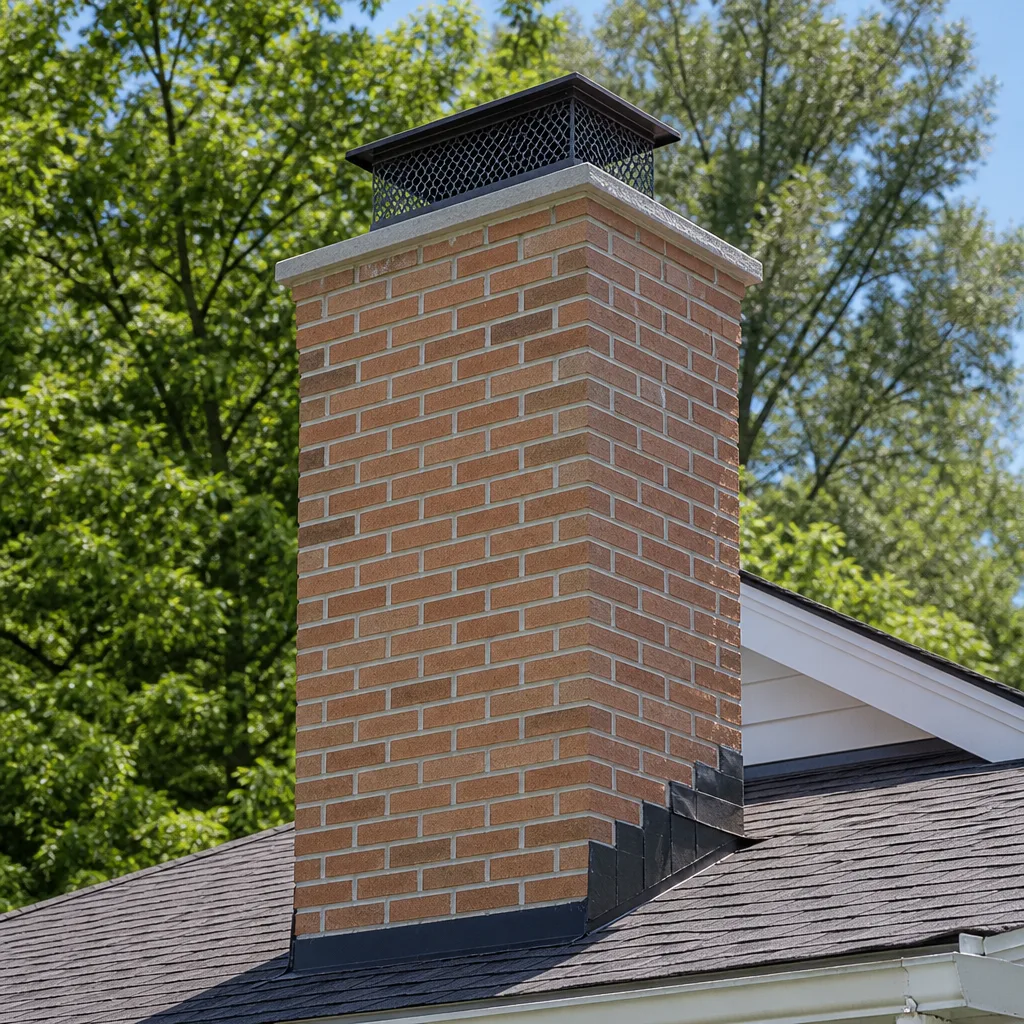 Masonry repair
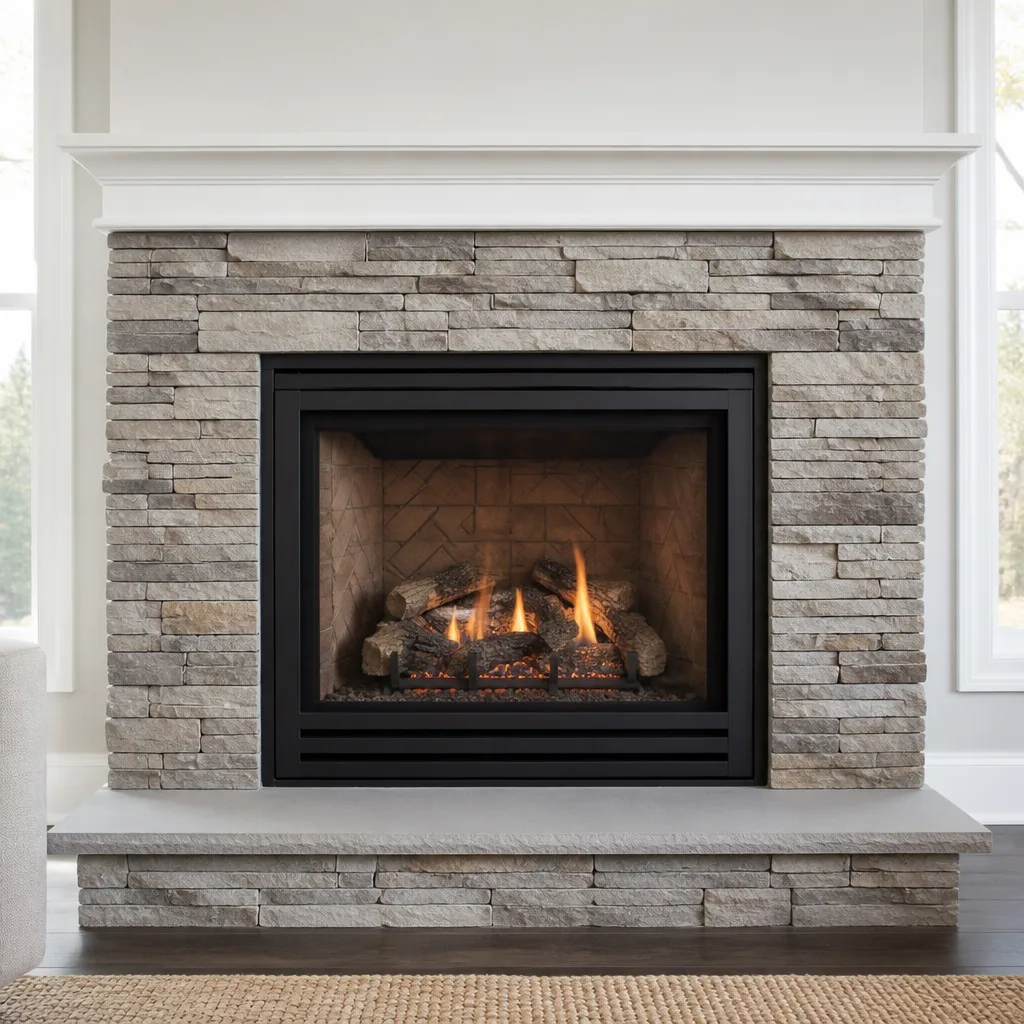 Gas fireplace service
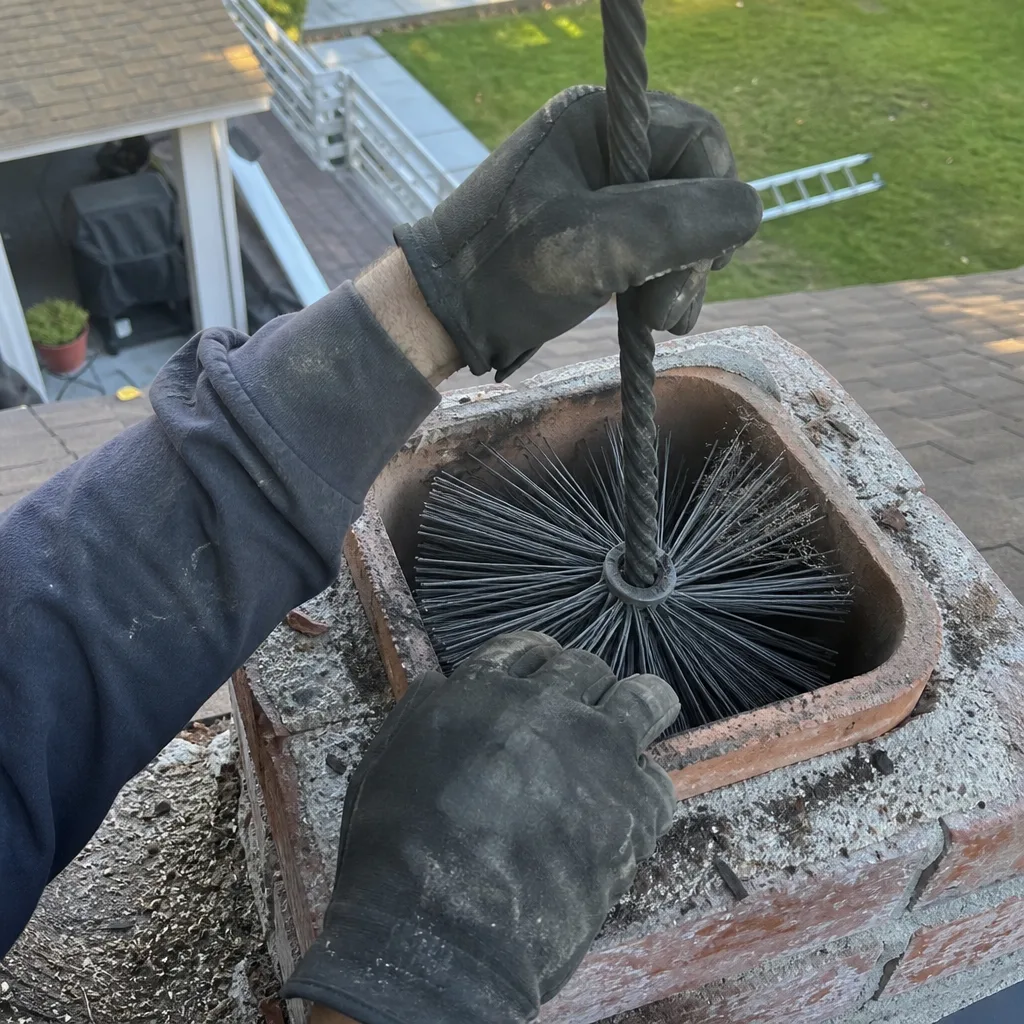
Level 1 sweep and inspection to the NFPA 211 annual standard - flue, crown, cap, and flashing checked and photographed
Chimney sweep logs do not sweep chimneys. They loosen some creosote - which then falls where a brush and vacuum still have to collect it.
Chimney Sweep Troubleshooting: Common Problems and How to Fix Them
Most chimney problems homeowners call about aren’t actually chimney problems at all. They’re symptoms: smoke rolling into the living room, a sour smell on humid nights, water stains creeping down the brick face. In Lynwood, where winter fires are a nightly ritual and summer humidity pushes hard against masonry, we get these calls constantly. This guide walks through the most common symptoms, what’s actually causing them, and which fixes are real versus which ones just buy you another season. If you understand what your chimney is telling you, you’ll save money, avoid repeat visits, and know exactly what to ask for when you call a specialist.
Quick Answer
Chimney problems fall into five symptom groups: smoke rollout (blockage or pressure issue), persistent odor (liner breach or creosote buildup), downdraft (negative air pressure or cap problem), water staining (masonry or flashing failure), and slow draw (partial blockage or flue sizing). Each points to a different repair zone. A sweep alone fixes only one of these. The rest need a liner inspection, masonry work, or a make-up air solution.
Styles & brands we work with
- Sweep & inspection
- Caps & crowns
- Flue relining
- Masonry repair
- Gas fireplace service
Table of Contents
- Smoke Rollout: When Smoke Comes Back Into the Room
- Chimney Odors: Creosote Smell vs. Moisture Smell
- Downdraft and Backdraft: Why Your Chimney Pushes Air the Wrong Way
- Water Staining and Efflorescence: Masonry Problems You Can See
- Slow Draw: The Fire Works, But It Feels Weak
- Liner Red Flags: When to Inspect Before You Light Another Fire
Smoke Rollout: When Smoke Comes Back Into the Room
Smoke rollout is the one symptom nobody ignores. You light a fire, the flue is open, and within minutes a haze hangs at ceiling level. It smells bad, it sets off detectors, and it makes people think their chimney is broken. Sometimes it is. Just as often, it’s a pressure problem in the house itself.
What it feels like
- Smoke drifts into the room within 10-15 minutes of lighting the fire, not immediately
- The fire burns fine once it’s going, but struggles for the first half hour
- Opening a nearby window fixes it within minutes
- It’s worse on cold starts and better on warmer days
Most common causes
Cold flue reversal. The chimney is full of cold, dense air. Warm smoke can’t push it out until the flue heats up, and in the meantime, smoke follows the path of least resistance: into your living room. This is worse in tall chimneys and in Lynwood’s cooler winter mornings when the masonry is cold-soaked overnight.
Negative house pressure. Modern Lynwood homes are tighter than older construction. Exhaust fans, the furnace, the water heater, even a running dryer pull air out of the house. If the chimney is the easiest place for replacement air to enter, it will. Smoke follows the air current inward. We’ve walked into homes where the kitchen exhaust fan alone was enough to reverse a chimney draft. The fix isn’t in the chimney at all, it’s a make-up air vent or a window cracked an inch on the fireplace side of the house.
Actual blockage. A bird nest, a collapsed flue tile, or a deep creosote accumulation can physically block the smoke path. This is the one cause a sweep actually resolves. If your flue hasn’t been inspected in over a year, this moves to the top of the list.
How to fix it
- Try the window test: open a window near the fireplace about two inches before lighting. If rollout stops, the problem is house pressure, not the chimney.
- Roll a newspaper, light it, and hold it up inside the firebox toward the damper for 30 seconds. This pre-heats the flue and breaks cold air reversal.
- If smoke still rolls out with a warmed flue and an open window, you likely have a blockage. Stop using the fireplace and call a chimney specialist in Lynwood for an inspection.
We don’t recommend burning a fire “just to see” if the problem resolves. Smoke rollout means combustion gases are entering your living space. If it happens consistently, the chimney needs eyes on it. A camera inspection during a regular chimney sweep in Lynwood catches blockages early, before they become a smoky surprise.
Chimney Odors: Creosote Smell vs. Moisture Smell
A fireplace that smells like last winter’s campfire on a humid July day isn’t holding onto smoke odor. That’s moisture interacting with creosote inside the flue. The smell is chemistry, not memory. But there’s a second odor, mustier and earthier, that means something completely different: water is moving through your masonry, and you’re smelling the mineral residue it leaves behind.
Creosote odor
Creosote is the tarry byproduct of wood combustion. It builds up on flue walls with every fire, even the “clean” ones. In dry conditions, it’s mostly inert. When humidity rises, especially during Lynwood’s summer months when marine air pushes inland, the creosote absorbs moisture and off-gasses. The smell is sharp, smoky, sometimes acrid.
The fix is straightforward: a mechanical sweep removes the creosote, and the smell goes with it. If the odor persists after a sweep, the creosote has soaked into the flue liner itself, which means the liner may need restoration or replacement rather than just cleaning.
Efflorescence and masonry odor
Efflorescence is the white, chalky film that appears on brick faces when water migrates through masonry and evaporates, leaving mineral salts behind. It has a faint, musty, almost dusty smell. It’s not coming from your last fire, it’s coming from the bricks themselves.
This odor means the chimney’s exterior shell is compromised: a cracked crown, deteriorated mortar joints, missing cap, or failed flashing. The repair path is masonry work, not a sweep. In Lynwood’s older housing stock, where many chimneys are 50 to 70 years old, we see this pattern often. The bricks absorb rain, the liner stays dry, and the homeowner is confused because they just swept the chimney and it still smells.
The distinction matters because the fixes cost very different amounts. A sweep for creosote odor is an hour of work. Masonry repair for moisture intrusion is a waterproofing, crown, or flashing job. Knowing which smell you’re dealing with tells you which technician to call. Our chimney repair service in Lynwood starts with a camera inspection so we can show you exactly where water is entering, then we fix that specific path, not the whole chimney.
Downdraft and Backdraft: Why Your Chimney Pushes Air the Wrong Way
Downdraft is the most confusing chimney problem for homeowners because the chimney looks fine. The damper is open, the flue was swept last season, the fire lights without issue. But on certain days, the smoke blows back down into the room, or worse, the cold air pours down even when there’s no fire at all. It feels like the chimney is haunted. It’s not. It’s physics, and in Lynwood’s dense residential neighborhoods, the physics get complicated.
The negative pressure loop
Every house breathes. Air enters through vents, windows, gaps, and cracks; air leaves through exhaust fans, the furnace, the water heater, and the dryer. In a perfectly balanced house, the chimney contributes naturally to this cycle by pulling air up and out. But when the house is sealed too tight, or when multiple exhaust appliances run at once, the chimney becomes the air inlet. Outside air rushes down the flue to equalize the pressure. That’s backdraft.
We see this constantly in Lynwood homes that have been weatherized with new windows, added attic insulation, and sealed crawl spaces. The homeowners upgraded their envelope and accidentally starved their fireplace. No amount of sweeping fixes it. The solution is a make-up air source: either a dedicated vent near the fireplace or a mechanical system that balances house pressure.
Cap and height problems
Sometimes the chimney itself creates its own downdraft. A missing or undersized cap lets wind blow directly across the flue opening, which can force air downward. A chimney that terminates too close to a roof peak or taller neighboring structure may sit in a wind shadow, where turbulence and pressure differentials push air back down instead of letting it rise.
In Lynwood, where homes are built close together and roof lines vary block by block, a chimney that worked fine for decades can suddenly develop downdraft after a neighbor builds a second story or a row of tall trees matures nearby.
How a specialist fixes it
- Measure the draft with a manometer, both cold and heated, to see exactly how much pressure the flue is producing
- Check for negative house pressure by testing with exhaust appliances on and off
- Inspect the cap and termination height against the surrounding roofline
- Recommend the fix specific to the cause: make-up air, a vacuum-relief cap, or a flue extension
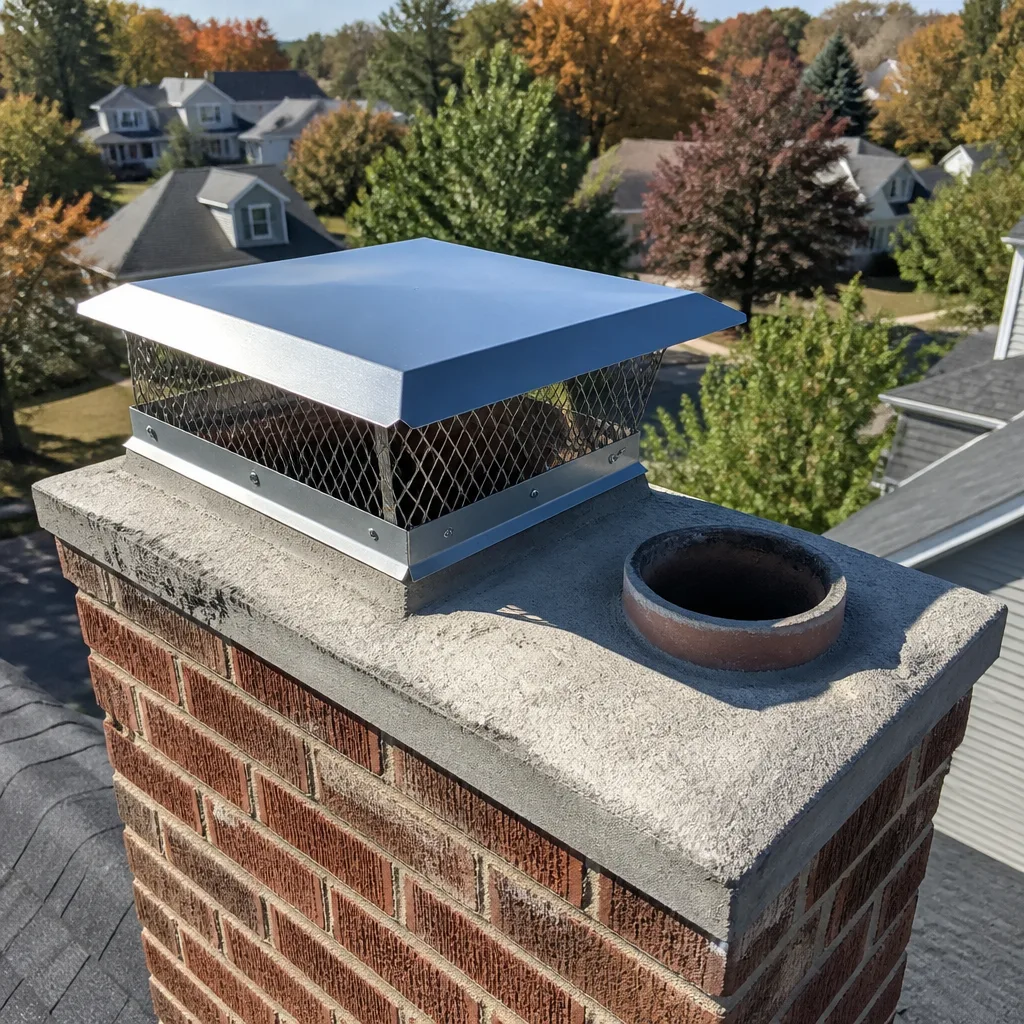
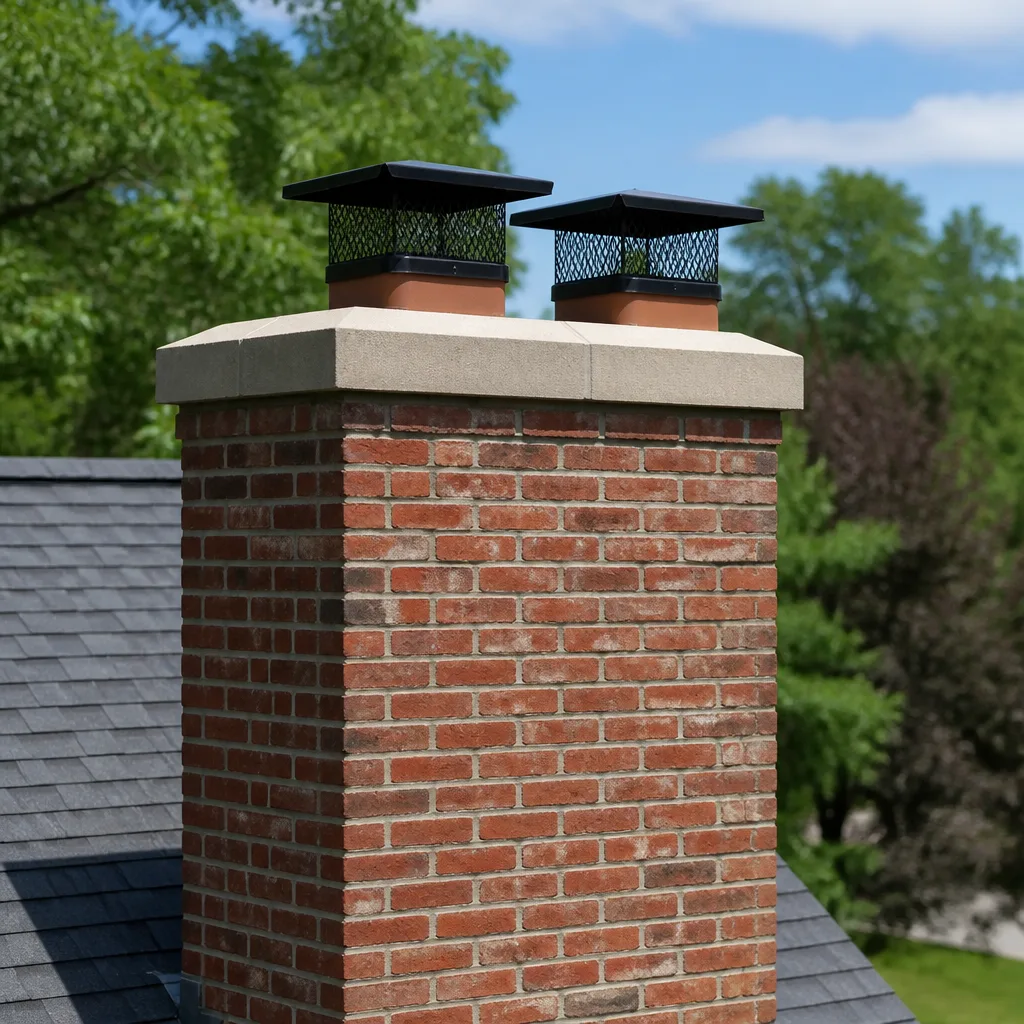
This is where the difference between a sweep-only company and a full-service chimney specialist shows. A sweep can clean your flue. Diagnosing why the flue won’t draw in the first place takes tools, experience, and an understanding of how the whole house works as a system. We carry Gelco and Olympia Chinmney caps and terminations because downdraft often comes down to what sits on top of the flue, and the right cap design changes everything.
Water Staining and Efflorescence: Masonry Problems You Can See
Water is the most destructive force a chimney faces, and it announces itself in visible ways long before structural failure. If you see dark stains running down the brick, white chalky patches blooming across the surface, or flaking mortar around the base, the chimney has a water intrusion problem. The question is where the water is getting in, and the answer determines what fix you actually need.
Reading the stains
- Dark streaks near the top. Usually a cracked or missing chimney cap, or a deteriorated crown. Water enters at the top and runs down the inside of the flue or the outside of the masonry.
- White efflorescence lower on the stack. Water is soaking through the brick and evaporating, leaving minerals behind. This points to spalling bricks and failed mortar joints, not a top-down leak.
- Water stains on the ceiling near the fireplace. Flashing failure where the chimney meets the roofline. The chimney isn’t leaking, the joint is.
- Damp smell inside the firebox after rain. Water is entering through the flue itself, usually because the cap is missing or the flue liner is cracked.
The repair path
Each stain pattern maps to a different repair. A cracked crown needs recrowning with the right material, not patching compound. A failed flashing needs the roofline joint reopened and redone, not caulk. Spalling brick needs selective rebuild with matched brick and proper mortar, not just repointing.
Here’s what matters: you should see the evidence before you pay for the fix. A camera inspection from the top down and the bottom up shows exactly where water is traveling. We use this process on every chimney repair in Lynwood because it turns a guess into a diagnosis. When we quote brick work, we can point to the specific joints that are failing. When we quote a crown, we can show you the cracks driving the leak.
One thing we see in Lynwood’s older neighborhoods: homeowners who repoint a chimney and wonder why it still leaks. The brick was fine. The leak was above it. That’s why the inspection comes first.
Slow Draw: The Fire Works, But It Feels Weak
Slow draw is the quiet cousin of smoke rollout. The fire lights, it burns, but it never quite roars. Logs smolder instead of flaring. The glass gets sooty. There’s a lazy quality to the flame, like the fireplace is breathing through a straw. This isn’t a failure, it’s a restriction, and restrictions have specific causes.
Sizing and configuration
Some chimneys were never sized correctly for the fireplace they serve. The flue is too small for the firebox, or too large to build adequate draft velocity. In older Lynwood homes, we sometimes find fireplaces that were rebuilt or refaced at some point, changing the firebox opening without changing the flue. The result is a mismatch that limits draw no matter how clean the chimney is.
Partial blockage
A creosote accumulation doesn’t have to fully block a flue to reduce draft. Even a quarter-inch of glazed creosote across the flue walls shrinks the effective diameter enough to notice. Add a little debris, a nesting birds’ leavings, or a partially open damper, and the draw drops further.
The damper problem
Homeowners often open the damper wider thinking it’ll help. If the damper is fully open and the draw is still slow, the problem isn’t damper position, it’s what’s above or below it. A damper that’s rusted partially shut, or a throat damper that doesn’t seat properly when open, can restrict flow even when it looks open from below. We’ve found dampers in Lynwood fireplaces that were warped, rusted, or simply broken at the pivot, leaving the flue only half open no matter what the handle said.
The fix sequence
- Inspect the flue with a camera to measure actual internal diameter and check for buildup
- Verify the damper opens fully and seats correctly
- Check the firebox-to-flue ratio for sizing issues
- Clean if needed, then re-test draw with a draft gauge
A slow draw can also be your first early warning of a liner problem. If the flue liner is cracked, spalling, or shifting, the internal surface gets rough and the draft falls off. Chimney Sweep Lynwood’s home service area includes many Lynwood homes with original terra cotta liners now at the end of their service life, and slow draw is often the first symptom we see before more serious ones show up.
Liner Red Flags: When to Inspect Before You Light Another Fire
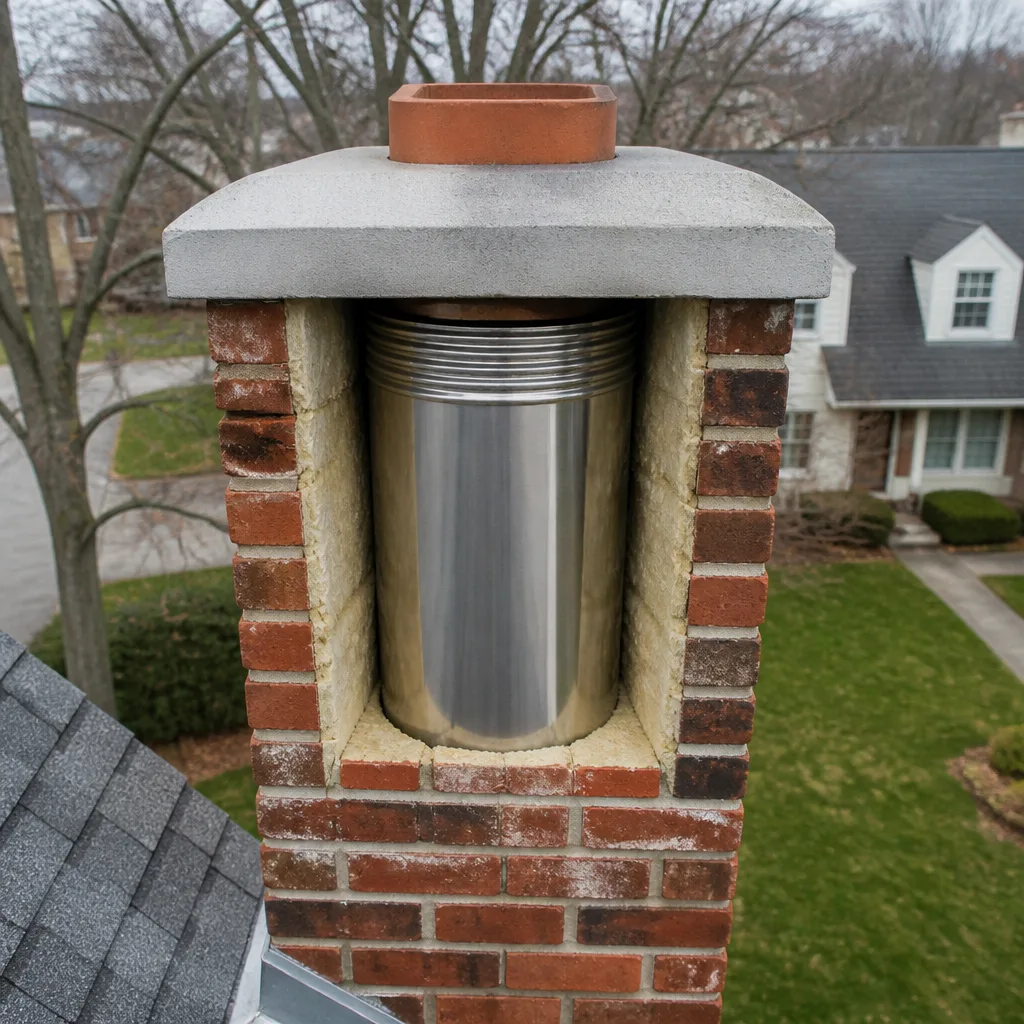
The flue liner is the chimney’s internal skin. In older homes it’s usually terra cotta tiles stacked inside the masonry. In newer installations it’s often a stainless steel flexible liner, like the DuraFlex systems we install. When the liner fails, the chimney keeps looking fine from the outside, but inside, it’s no longer containing heat and gases the way it should. These are the red-flag combinations that should trigger a camera inspection before another fire is lit.
The dangerous combinations
- Slow draw plus occasional smoke rollout on startup: classic early liner restriction. The flue can’t establish draft because its internal surface is damaged.
- Creosote odor that returns within weeks of a sweep: the liner’s interior is absorbing creosote because the surface has fractured or the joints have opened.
- Visible spalling or flaking inside the firebox, plus debris falling from above: chunks of liner tile are breaking loose and accumulating at the base.
- Water in the firebox after rain, plus a musty smell: the liner is cracked and allowing exterior water to travel into the flue system.
- A house that was built before 1980, with original terra cotta, and no cap for years: time and weather have had decades to work on the liner joints.
The repair-first option
If the camera inspection shows liner damage, you don’t automatically need a full relining. HeatShield restoration can repair and resurface damaged liner sections without tearing out the old one. It’s a fraction of the cost of full replacement, and it gets the chimney back to safe operation in a single visit. We use it on Lynwood chimneys all the time, especially when the damage is isolated to one section of the flue rather than the full length.
In some configurations, like older or non-standard chimneys where rigid liners can’t make the turns, a DuraFlex flexible liner is the right answer. The point is that the fix should match the damage, not automatically be a full replacement. “Repair-first” means we show you exactly what the camera found and tell you honestly what can be restored versus what genuinely needs replacement. If the liner can wait, we say so. If it can’t, we explain exactly why.
Common Mistakes to Avoid
- Opening the damper wider to fix smoke rollout. If the damper is already fully open, widening it isn’t possible, and the real cause is pressure or blockage. You’re masking the symptom while the underlying issue worsens.
- Burning “hot fires” to burn off creosote. Glazed creosote doesn’t burn off at fireplace temperatures. It requires mechanical removal, and a hot fire with heavy creosote buildup risks a chimney fire.
- Ignoring efflorescence because it’s “just cosmetic.” Efflorescence means water is moving through masonry. The white powder is cosmetic, the water source is structural. The longer it runs, the more expensive the repair.
- Waterproofing a chimney that hasn’t been inspected first. Sealing over existing water paths traps moisture and accelerates deterioration. Fix the entry path first, then waterproof if it’s warranted.
- Assuming a sweep will fix an odor problem. If the smell persists after a sweep, it’s either saturated liner or masonry moisture. A second sweep won’t help either.
- Hiring a sweep-only company for a structural problem. Most Lynwood chimney companies clean. Fewer inspect and repair. If you’ve got staining, draft, or liner red flags, call a specialist who can do the repair, not just report it.
See the difference
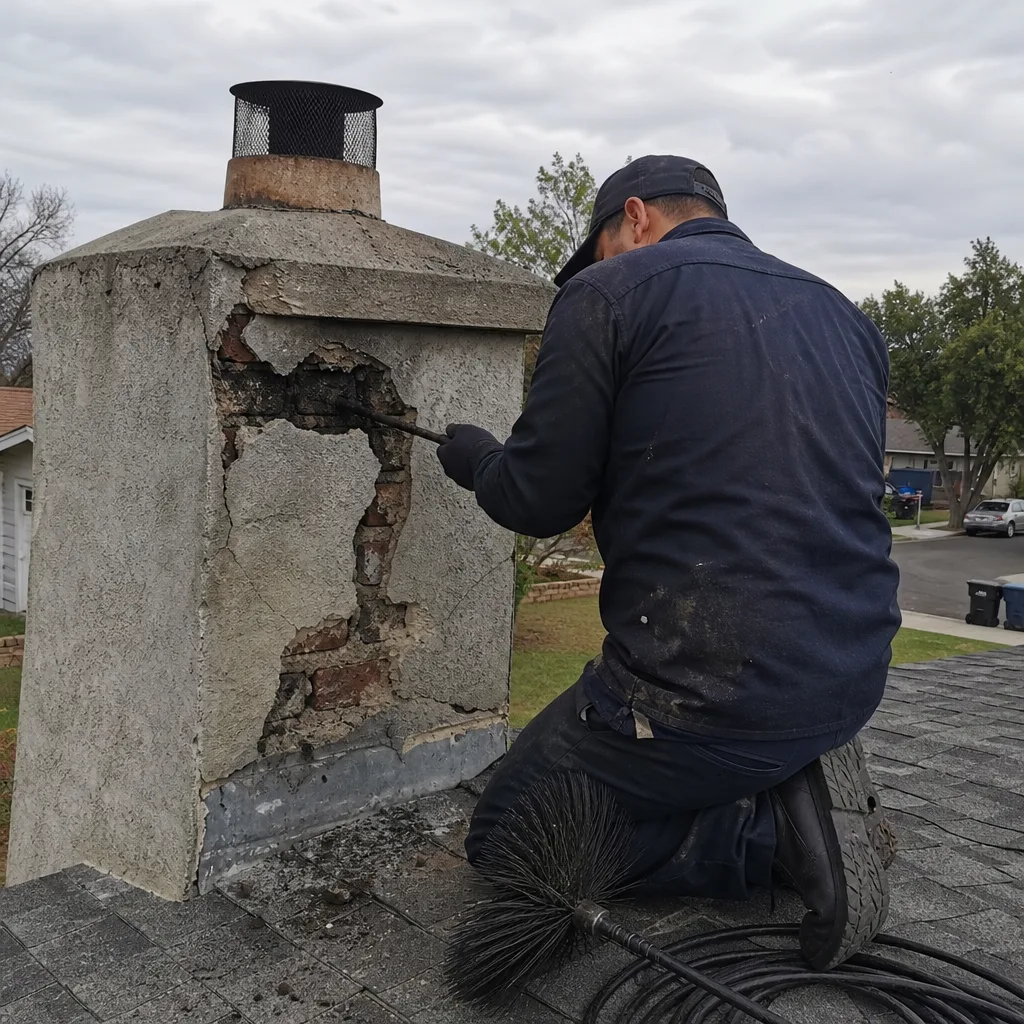 Before
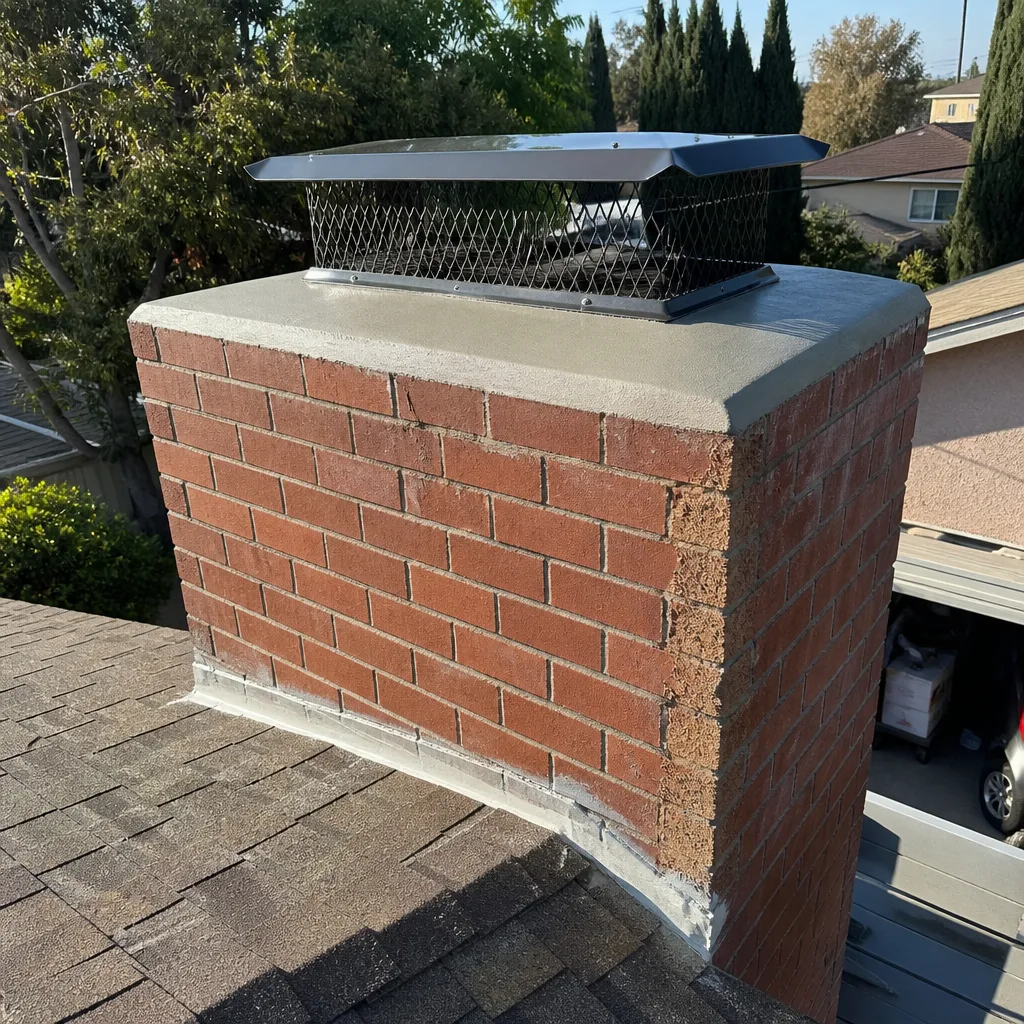 After
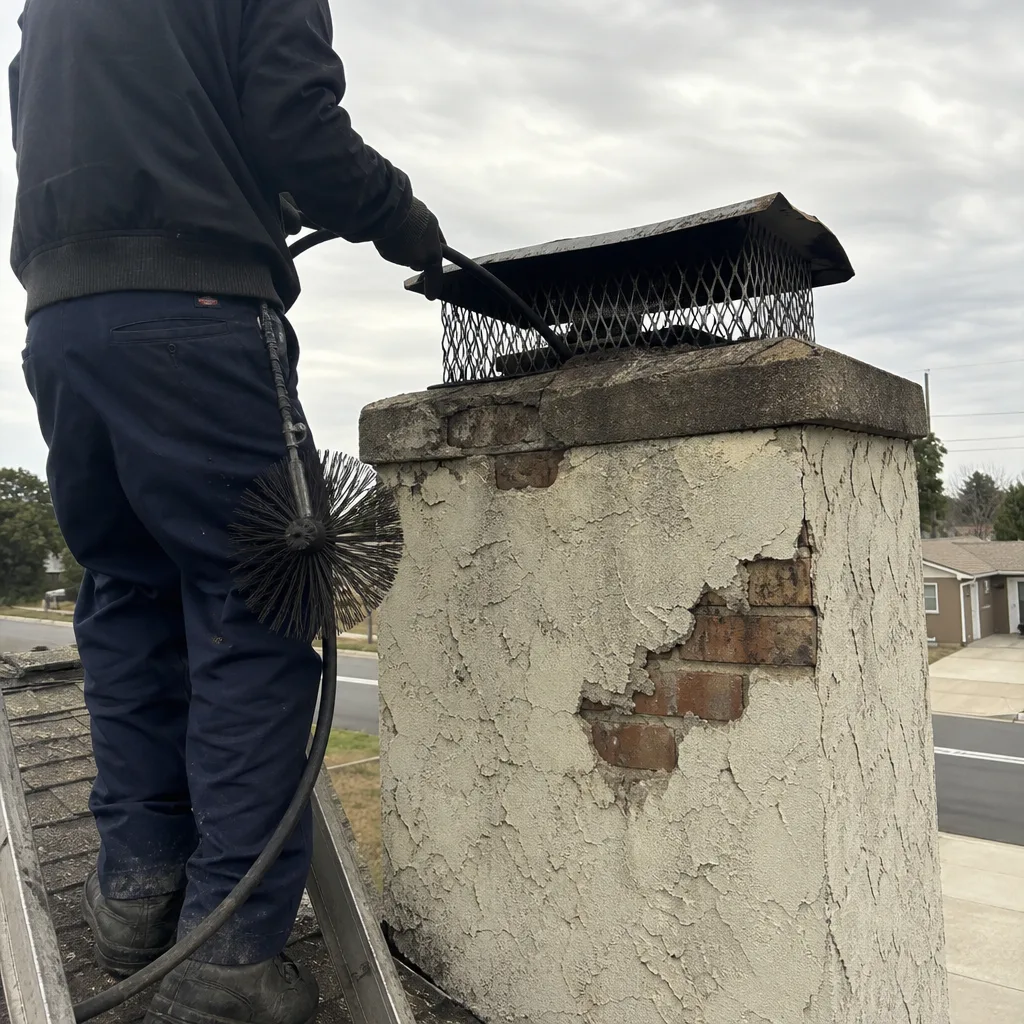 Before
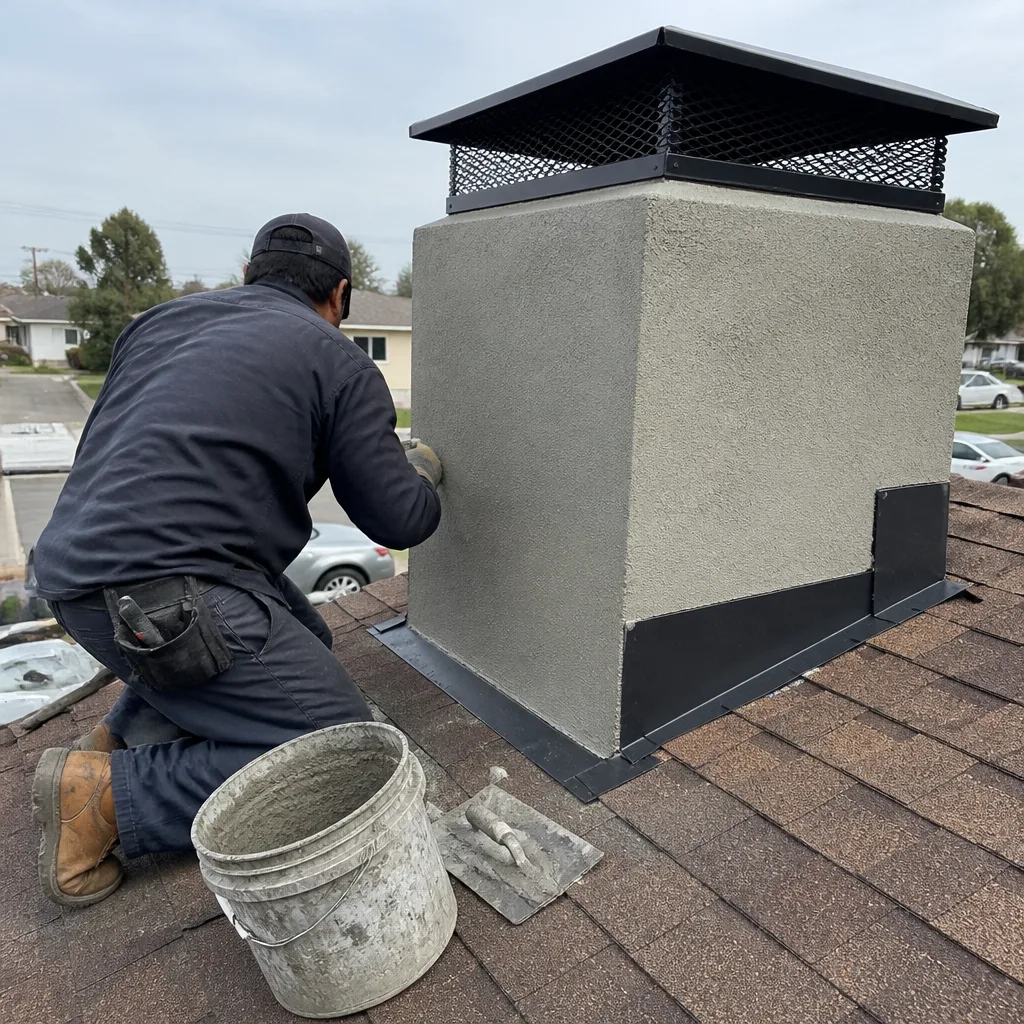 After
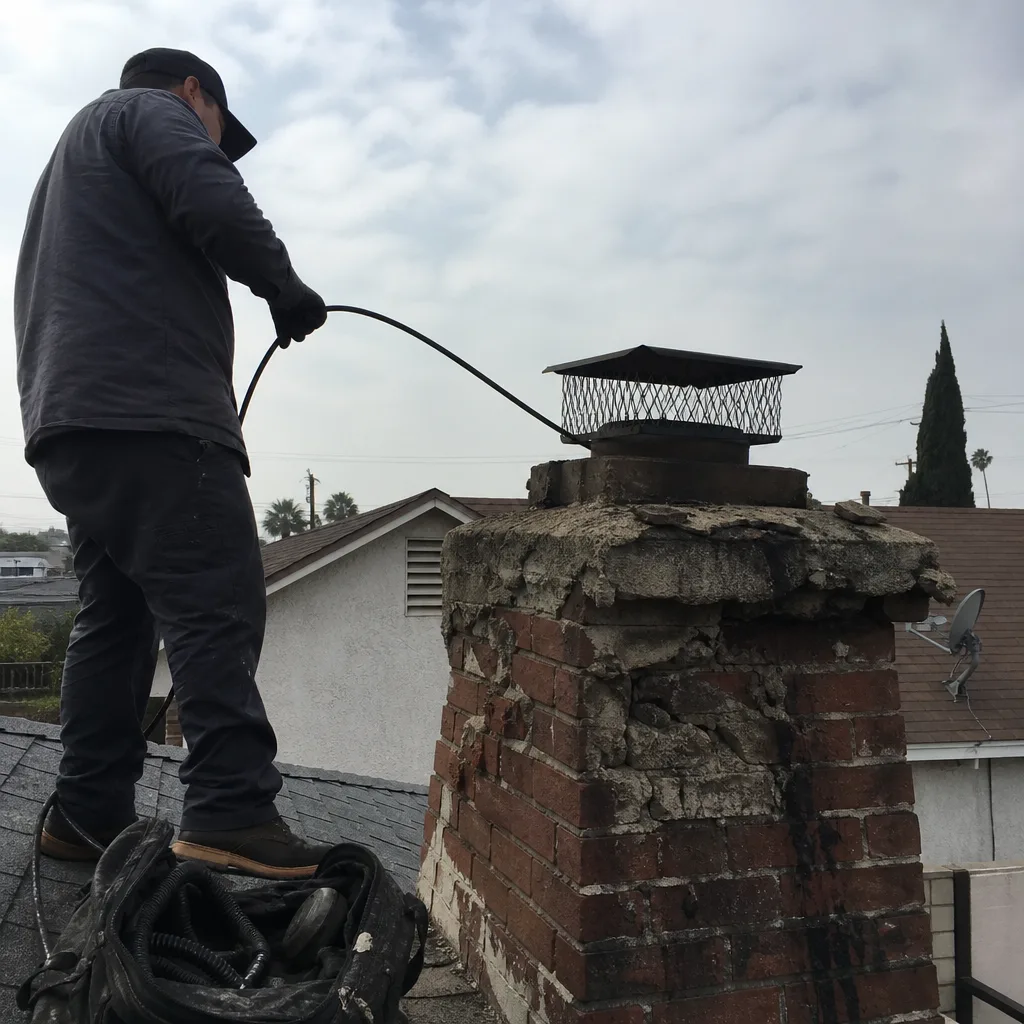 Before
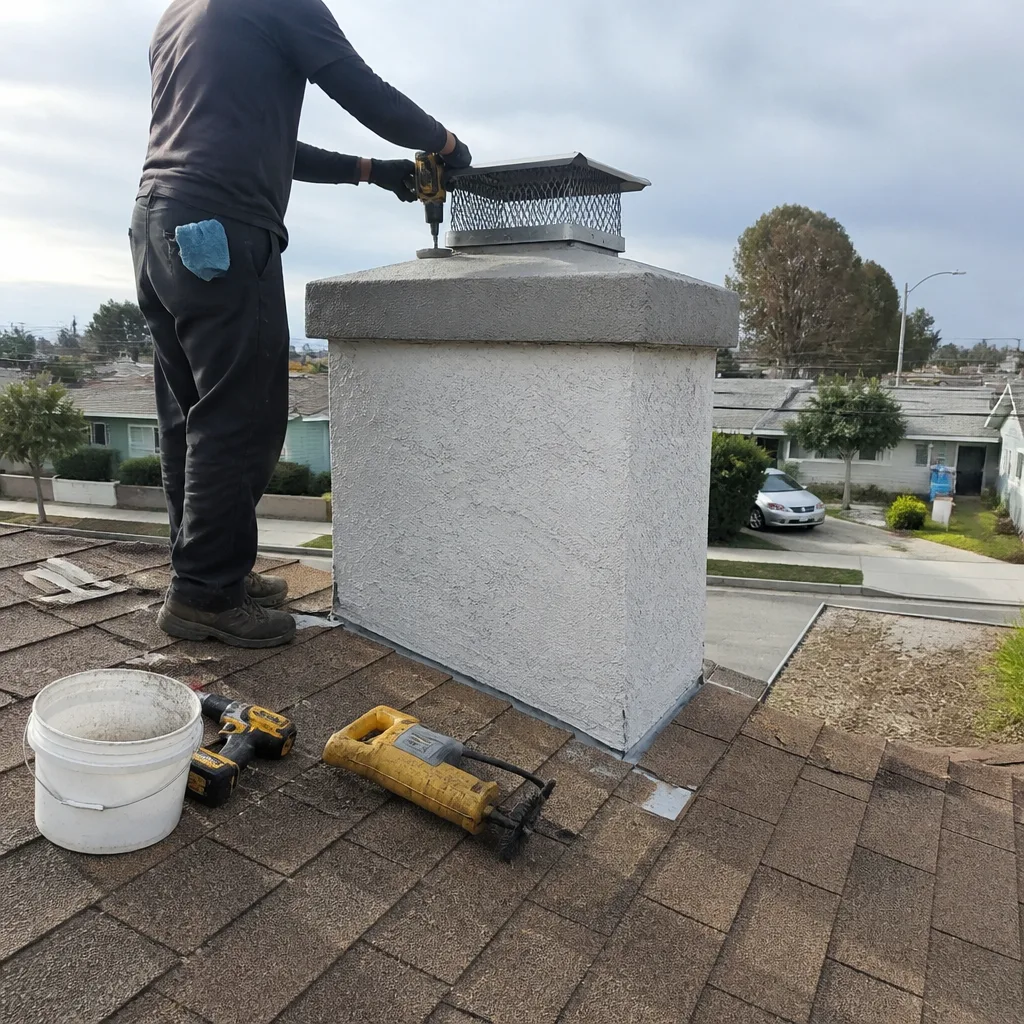 After
When to Call a Professional
You need a chimney specialist when the symptom repeats after basic fixes, or when it involves anything beyond surface cleaning. Persistent smoke rollout after the window test, odors that survive a sweep, water staining that returns after masonry patching, any sign of liner debris in the firebox, or a draft problem that only happens on certain days, all of these warrant a diagnostic inspection, not another DIY attempt. Chimney Sweep Lynwood offers free estimates in Lynwood and we inspect with cameras, so you see exactly what we see before any repair is quoted. Call (855) 916-8513 to schedule.
Frequently Asked Questions
Chimney sweep pricing in Lynwood typically runs between $150 and $300 for a standard cleaning and inspection, though final cost depends on flue size, creosote buildup level, and accessibility. The inspection is the valuable part; it’s what tells you whether the chimney needs anything beyond a cleaning. We quote a flat price before we start, and the camera inspection is included with every sweep. Call (855) 916-8513 for an exact quote.
Rain triggers chimney odor because water either interacts with creosote inside the flue or soaks into masonry and migrates inward. The first smells like smoke, the second smells musty or earthy. Each points to a different fix: a sweep for the first, masonry or crown repair for the second. If your chimney smells after rain in Lynwood, it’s worth a camera inspection to find the real source.
The National Fire Protection Association recommends a sweep whenever creosote buildup reaches 1/8 inch, and an annual inspection regardless of usage. For regular wood burners in Lynwood, that usually means one cleaning per burning season. Homes that burn manufactured logs or only occasional weekend fires can sometimes go two years, but the inspection is what matters. The sweep removes buildup, the inspection catches problems before they become dangerous.
Only if the draft problem is caused by blockage or creosote accumulation. If the draft issue comes from negative house pressure, a missing cap, a flue sizing mismatch, or a liner problem, a sweep alone won’t fix it. The right approach is a diagnostic visit that identifies the cause, then a targeted repair. We handle both the sweep and the repair in Lynwood, so there’s no referral chain.
You typically can’t see liner cracks from inside the firebox with the naked eye. The cracks occur higher in the flue, invisible from below. A camera inspection shows the damage directly: vertical splits in terra cotta tiles, gaps at the joints, spalling surfaces, or metal that’s rusted through. If you have symptoms but can’t see the cause, the camera finds it. That’s standard practice on every chimney sweep in Lynwood we perform.
Yes. Lint accumulation in dryer vents is a leading cause of residential structure fires, and the blockage often sits deep inside the run where a homeowner can’t reach it. Professional cleaning uses rotary brushes to scrub the full length of the vent, not just the first few feet. We offer dryer vent cleaning in Lynwood alongside chimney service, so if you’re already having the chimney done, the dryer vent is a quick add-on during the same visit.
The Bottom Line
Chimney troubleshooting comes down to matching the symptom to its real cause. Smoke rollout is almost always pressure or blockage. Odors split between creosote and moisture, and nothing wastes money faster than fixing the wrong one. Water staining maps to specific structural zones. Slow draw whispers before liner problems shout. And the cheapest repair is the one you make before small damage becomes structural failure. If you burn wood in Lynwood, get the chimney inspected annually, ask for camera evidence, and work with a company that can clean, diagnose, and repair all under one roof. Chimney repair in Lynwood starts with understanding exactly what’s happening inside your flue, and this guide is the same process we use in the field: identify the symptom, find the cause, fix the cause.
Written by the team at Chimney Sweep Lynwood, serving Lynwood since 2017.